
Gutter Replacements
Your trusted partner for professional home services. Quality workmanship, guaranteed satisfaction.

Gutter Replacements | Roofing | Johnson City
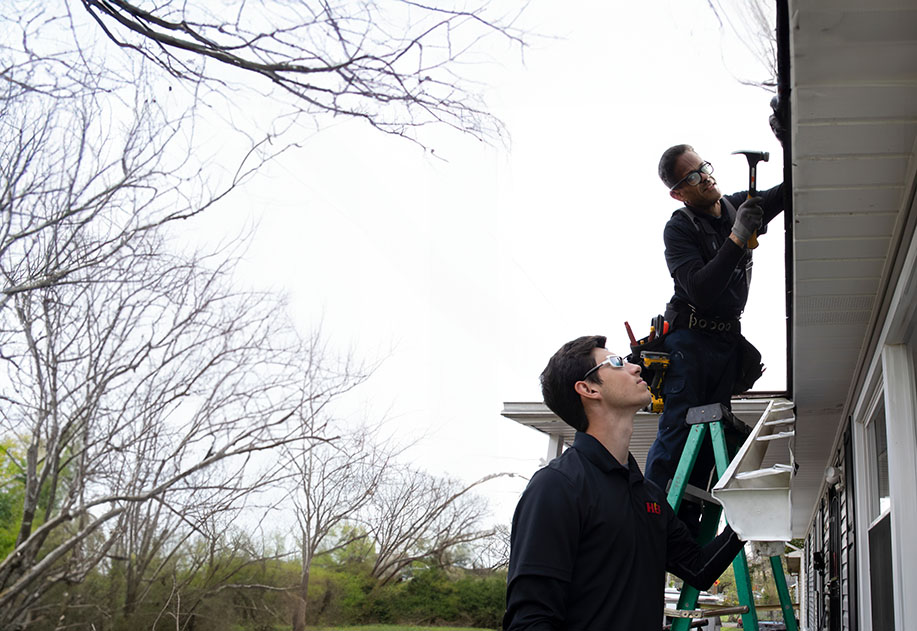
Whether last spring’s storm loosened a few shingles or years of Appalachian rain have rusted your old gutters, HEP’s roofing team has Johnson City covered. Our certified installers arrive with top-rated architectural shingles, seamless aluminum or copper gutters, and the kind of hometown courtesy you only get from a locally owned company. We inspect your entire roofline for hidden rot, sagging fascia, and improper pitch, then craft custom-fit gutters on-site to ensure a perfect match and a leak-free finish. From the first drone-assisted assessment to the final magnet sweep for stray nails, every step is built around safety, transparency, and respect for your property.
Homeowners choose HEP because we back our work with industry-leading warranties and flexible financing, but also because we make the process refreshingly easy. One call gets you a free estimate, clear photos of any damage, and a straightforward plan that can be completed in as little as a day—often without you ever leaving the couch. When the next downpour hits Boone Lake or the winds whip through Cherokee National Forest, you’ll relax knowing your new roof and gutters are channeling water exactly where it belongs: away from your home and out of your mind.
What Our Customers Say


Roofing Gutter Replacements in Johnson City: How HEP Company Protects Local Homes
Gutters have one core purpose: safely channel rainwater away from a home’s roof, walls, and foundation. In Johnson City’s four-season climate—where spring downpours, summer thunderstorms, autumn leaf fall, and winter freeze-thaw cycles all make an appearance—those channels carry an exceptionally heavy workload. When gutters clog, corrode, sag, or pull away from fascia boards, water finds other escape routes that can compromise roofing materials, wall sheathing, and even slab foundations. HEP Company’s roofing gutter replacements focus on building a long-lasting water-management system custom-fit for Washington County and the surrounding Appalachian terrain.
Why Roofing Gutters Fail in Johnson City’s Environment
Johnson City averages more than 46 inches of rain per year, plus snow and sleet from December through March. This moisture, combined with abundant hardwood trees, accelerated UV exposure at higher elevations, and temperature fluctuations between 20 °F winter lows and 90 °F summer highs, places stress on conventional gutter assemblies.
- Continuous wet-dry cycling causes standard aluminum seams to oxidize and leak
- Heavy leaf litter from oak, maple, catalpa, and birch species blocks downspouts
- Freeze-thaw expansion widens tiny seam cracks into major gaps
- Mountain winds tug at loose spike hangers, bending gutters away from fascia
- Acidic runoff from leaf tannins corrodes galvanized steel
How HEP Evaluates Existing Roofing and Gutter Systems
Before recommending any replacement, HEP’s roofing specialists perform a diagnostic checklist that includes:
- Inspecting fascia boards for rot, mold, or insect activity
- Measuring roof pitch and overhang to determine optimal gutter size
- Checking shingle eave edges for moisture intrusion or ice-dam residue
- Flushing downspouts to test for internal blockages
- Scanning adjacent landscaping for grade issues that may redirect water toward the foundation
That data guides a replacement plan that matches gutter capacity, material, and fastening configuration to each home’s specific demands.
Core Components of a HEP Gutter Replacement
Replacing gutters is more complex than removing old troughs and adding new sections. The system integrates with roofing, siding, and even underground drainage. HEP technicians approach the job as a holistic re-engineering project.
Seamless K-Style Troughs
Most Johnson City homeowners select seamless aluminum gutters because they reduce leak points. HEP fabricates each continuous trough on-site, feeding 0.032-inch aluminum coil through a forming machine calibrated for 5-inch or 6-inch K-style profiles. The absence of segment seams between end-caps and corners minimizes maintenance and makes the gutter visually cleaner.
High-Capacity Downspouts
Downspouts are the exit lanes for rainwater. Undersized or poorly placed downspouts cause gutter backflow, especially during a mid-summer cloudburst when rainfall intensities can exceed two inches per hour. HEP installs 3×4-inch rectangular downspouts or 4-inch round outlets for roofs larger than 2,000 square feet. Corner offsets use broad-radius elbows to keep water velocity high, reducing debris settlement.
Hidden Hanger Fastening
Traditional spike-and-ferrule fastening loosens over time. Hidden hangers, secured with galvanized or ceramic-coated screws driven into rafter tails, resist uplift from ice and snow slides. HEP spaces hangers every 24 inches for 5-inch gutters and every 18 inches for 6-inch gutters, in compliance with the latest International Residential Code guidelines.
Drip Edge and Flashing Integration
A gutter replacement is incomplete without proper flashing. HEP installs aluminum drip edge under the starter shingle course, overlapping gutter back flanges to direct roof runoff into the trough rather than behind it. Where fascia boards sit flush with roof decking, additional kick-out flashing prevents water from seeping behind fiber-cement or vinyl siding.
Gutter Guard Options
In areas near Buffalo Mountain or along tree-lined streets such as Knob Creek Road, leaf litter poses year-round blockage threats. HEP offers three primary guard systems:
- Perforated aluminum covers that snap under shingles without fasteners
- Stainless-steel micro-mesh inserts secured with front lip screws for heavy pollen regions
- Reverse-curve solid covers that channel water around a curved nose into the gutter interior, ideal for pine-needle drop zones
Step-By-Step Workflow for a Johnson City Replacement Project
Every home is unique, but the workflow follows an established sequence designed for safety, precision, and minimal disruption to occupants.
1. Site Preparation
HEP sets staging zones for material delivery, positions extension ladders on stabilizer bars, and places gutter coil machines on level driveway surfaces. Drop cloths and plywood sheets protect landscaping and siding surfaces from falling debris.
2. Removal of Existing Gutters and Downspouts
Technicians unscrew hangers, cut segmented lengths at expansion joints, and lower sections to the ground via rope systems to avoid bending aluminum or scattering rust flakes onto walkways.
3. Fascia and Soffit Assessment
With gutters removed, underlying wood is fully visible. HEP carpenters replace any sections where moisture has softened the grain or where carpenter bees have bored tunnels. They also check attic ventilation at soffit vents to confirm unrestricted airflow.
4. On-Site Fabrication and Custom Cutting
Using a portable gutter machine, long continuous lengths are fed from aluminum coil stock, precisely measured to match each roof edge span. Corners are cut with 45-degree miters and sealed with long-life polymer sealant.
5. Installation of Hidden Hangers and Downspout Outlets
Hangers slide into the gutter channel before the entire length is lifted into place. A laser level ensures a subtle slope of 1/16 inch per foot toward each downspout outlet. HEP punches outlets with a specialized drop-punch tool, attaching downspout sleeves using rivets rather than screws to avoid protrusions that catch debris.
6. Application of Sealant and Flashing
All end-caps, corner joints, and outlet seams receive polyurethane sealant rated for 50-year elasticity. Drip edge flashing is slip-tucked beneath shingles and fastened with roofing nails.
7. Debris Cleanup and Waterflow Testing
HEP runs hose water onto the roof to mimic rainfall, confirming that flow reaches downspouts without pooling. Technicians collect metal scraps, old fasteners, and sawdust, leaving the property in pre-installation condition.
Material Choices for Long-Term Performance
While seamless aluminum dominates the residential market, homeowners occasionally choose alternative materials based on aesthetic preference, environmental considerations, or structural requirements.
Aluminum
The standard due to its balance of weight, cost, and corrosion resistance. Aluminum in a 0.032-inch thickness withstands Johnson City’s freeze-thaw cycles and can be color-matched to most exterior palettes through baked-on enamel finishes that resist ultraviolet fading.
Copper
Copper gutters add architectural flair to restored Craftsman bungalows in neighborhoods like Tree Streets. They form a russet patina over time, blending with cedar shake roofs. Copper’s higher tensile strength decreases thermal expansion, reducing movement at hanger points.
Galvalume Steel
Coated steel gutters provide rigidity for larger commercial roofs but require factory-applied paint to deter rust. In residential contexts, they are reserved for steep-slope metal roofing systems that demand a color-coordinated appearance.
Vinyl
Vinyl is lightweight and easy to cut but loses flexibility at temperatures below 40 °F, rendering it less suitable for upper-elevation areas like Boone Lake. HEP rarely recommends vinyl for whole-house replacements in Johnson City.
Water Management Challenges Unique to Johnson City
The city’s rolling topography creates microclimates that influence gutter design.
Mountain Ridge Updrafts
Houses on ridgelines experience crosswinds accelerating rainwater under shingle edges. Gutter aprons extend further under shingles to block wind-driven moisture.
Valley Shadow Frost
Homes tucked in narrow valleys remain in winter shade longer, prolonging snowmelt on roofs. Oversized 6-inch gutters with heat-trace cables keep meltwater moving, preventing ice dams.
Clay-Rich Soil Saturation
Much of Johnson City sits on soil with high clay content, which drains slowly. Redirecting downspouts at least six feet from foundations or connecting them to French drains reduces hydrostatic pressure against basement walls.
Architectural Styles and Gutter Aesthetics
Johnson City showcases an eclectic mix—from mid-century ranches on Cherokee Road to contemporary craftsman builds near ETSU. HEP tailors gutter profiles and colors to complement each façade.
- 5-inch K-style in white for brick ranches provides a classic crown molding appearance
- 6-inch half-round copper for Tudor-inspired residences accentuates steep gables
- Matte black aluminum complements board-and-batten siding on modern farmhouse designs
- Two-tone combinations—white troughs with dark bronze downspouts—match window trim on colonial revivals
Decorative Accessories
- Rain chains as downspout alternatives for covered porches facing interior courtyards
- Leader heads that collect water from multiple downspouts, featuring hand-soldered copper details
- Ornamental strap hangers visible beneath half-round gutters to enhance traditional architecture
Code Compliance and Safety Standards
HEP aligns every gutter replacement with state and local building requirements.
Tennessee Building Code Highlights
- Minimum 5-inch gutters for roofs up to 5,200 square feet
- Downspout discharge must not create a nuisance on adjacent property
- Ice barrier membrane required at eaves in zones above 4,000 heating degree days, which includes Johnson City
OSHA Fall Protection
Technicians use:
- Roof anchors rated at 5,000 pounds minimum tensile strength
- Personal fall arrest systems with shock-absorbing lanyards
- Ladder stabilizers and stand-off arms to maintain three feet of clearance above eave edges
Maintenance Recommendations After Replacement
Even the highest-quality gutter system requires routine care to maintain performance across decades of East Tennessee weather.
Semi-Annual Visual Checks
Walk the property after spring pollen season and post-autumn leaf drop, scanning for:
- Overflow marks or tiger-striping on front gutter faces
- Visible gaps between troughs and fascia indicating hanger loosening
- Shingle grit accumulation at gutter bottoms, suggesting roof wear
Safe Cleaning Practices
- Use a fiberglass extension ladder with padded standoff arms to avoid denting gutters
- Scoop debris with plastic trowels to prevent scratching enamel finishes
- Flush downspouts with hose water from the top until flow exits the bottom at full velocity
Seasonal Add-Ons
- Install heat cables before the first freeze to melt snowpack on low-slope roofs
- Add splash blocks or extenders during rainy season to carry discharge over flower beds
Sustainable Rainwater Solutions
Gutter replacements also present opportunities for eco-friendly upgrades that conserve water and mitigate storm runoff.
Rain Barrel Integration
Downspouts can be fitted with diverter valves that channel water into 55-gallon food-grade barrels. Homeowners can use collected water for:
- Vegetable garden irrigation
- Flower bed drip systems
- Car washing during summer drought advisories
Stormwater Management
Connecting downspouts to underground corrugated pipe leading to a dry well helps recharge groundwater aquifers and reduces load on municipal storm drains. HEP plans slope angles to ensure gravity flow while incorporating clean-out ports for future servicing.
Permeable Paver Extensions
Where driveways sit near downspout outlets, HEP recommends permeable paver pads that let runoff soak through gravel layers rather than pool on asphalt. This reduces splash-back dirt stains on siding.
Indicators That a Homeowner Should Consider Gutter Replacement Rather Than Repair
HEP technicians often encounter homeowners uncertain whether patching a leak is sufficient. The following scenarios usually tip the balance toward full replacement:
- More than 25 percent of hangers have pulled away or broken
- Multiple seam splits exist and the gutters are sectional rather than seamless
- Significant oxidation or pinpoint holes appear along the gutter floor
- Roof decking shows rot where waves of water have cascaded behind the gutter
- Downspouts are too small for the roof area and cannot be retrofitted without refabricating outlets
Enhancing Attic and Wall Health Through Proper Gutter Function
Water infiltration doesn’t just stain drywall; it triggers a chain reaction inside the building envelope.
Mold and Mildew Control
When water backs up under shingles and into attic insulation, humidity levels skyrocket. Mold colonies thrive on cellulose insulation and wood rafters, compromising indoor air quality. By guaranteeing unobstructed water flow, a new gutter system serves as a frontline defense against mold proliferation.
Insulation Efficiency
Wet fiberglass insulation loses loft and thermal resistance, raising heating bills during Johnson City’s chilly winters. A replaced gutter system prevents wetting events, keeping R-values intact.
Foundation Stability
Excess runoff near footings can erode soil and create differential settlement. Redirected downspouts lower moisture near foundations, preserving structural integrity in the clay-rich soil strata common to Washington County.
The HEP Difference in Craftsmanship and Materials
Several subtle practices separate an ordinary gutter installation from one built to endure two or three decades of Appalachian weather.
Precision Slope Calibration
Using digital slope meters, HEP achieves exact pitch across long runs, eliminating standing water pockets that breed mosquito larvae in summer.
Industrial-Grade Sealants
Where many installers rely on basic siliconized acrylic caulk, HEP applies tripolymer sealants with UV stabilizers and temperature flexibility from ‑40 °F to 220 °F, crucial for resisting Johnson City’s broad seasonal swings.
Rigorous Post-Installation Inspection
A senior foreman reviews hanger spacing, outlet placement, and drainage angles while referencing a 25-point checklist. Only after sign-off is the job deemed complete.
Longevity Expectations and Warranty Coverage
Properly maintained aluminum gutters hold service life projections of 20 to 30 years. Factors that extend or shorten lifespan include:
- Roof overhang: deeper eaves shield gutters from direct rainfall velocity
- Surrounding foliage: frequent cleaning mitigates corrosive tannin exposure
- Sun orientation: south-facing gutters encounter higher thermal expansion cycles
HEP backs labor workmanship with multi-year guarantees, and aluminum coil stock bears manufacturer warranties on finish integrity against peeling or cracking.
Integrating Gutter Replacement with Roof Upgrades
Homeowners often combine gutter projects with roof replacements for maximum efficiency.
Timing Considerations
Replacing gutters after new roofing ensures flashing integration under fresh shingles, preventing disturbance of newly laid courses. HEP coordinates schedules so roofers complete underlayment and shingles before gutter crews arrive.
Matching Metal Finishes
Architectural metal edges on roofs—such as drip edge and valley pans—should match gutter color to create a seamless aesthetic. HEP sources coil stock from the same finish families used in popular roofing metal lines.
Commercial Applications in Johnson City
While single-family homes make up most HEP projects, the company also retrofits gutters on small commercial buildings like medical offices and retail strip centers.
Box Gutter Conversions
Older flat-roof structures may use built-in box gutters that rust internally. HEP converts them to external seamless aluminum or steel K-style systems, installing scupper boxes and downspout conductor heads sized per International Plumbing Code flow tables.
Snow Guard Integration
Commercial metal roofs often accumulate snow that can slide en masse. Snow guards disperse loads, preventing gutter shear. HEP calculates guard row spacing based on roof length and pitch.
Common Misunderstandings About Gutter Upgrades
A few myths persist around gutter replacements; clarifying them prevents costly decision errors.
- Myth: Bigger gutters always solve overflow. Reality: Proper pitch and unobstructed downspouts matter more than dimension alone.
- Myth: Leaf guards end maintenance forever. Reality: Guards reduce debris entry but still need occasional rinsing to clear pollen and shingle grit.
- Myth: Repainting old gutters is cheaper than replacing. Reality: Structural defects in old troughs reappear quickly, negating cosmetic touch-ups.
Building Resilience Against Extreme Weather
Johnson City occasionally faces remnants of tropical storms funneling up the Tennessee Valley. Extreme rain events test gutter performance.
Overflow Contingency Planning
HEP designs redundancy into systems, such as:
- Dual downspouts at long gutter runs over 40 feet
- Secondary splash aprons on grade to slow water flow if primary drainage is overwhelmed
- Strategic landscaping berms that steer unexpected overflow away from crawl spaces
Wind Resistance
Hangers with screw-in ferrules resist 150-mph uplift. Corner reinforcing brackets add rigidity at high-stress points exposed to gusts.
Future-Proofing Through Smart Technology
The next wave of gutter innovation enhances monitoring and connectivity.
Sensor-Based Flow Alerts
Prototype sensors placed at downspout outlets measure water flow and transmit alerts to homeowners when irregular patterns indicate clogs or ice formation.
Heated Micro-Mesh Guards
Integrated heat-trace wiring inside mesh guards melts snow while preserving the guard’s debris-blocking ability, reducing ice dam risk on north-facing roof edges.
HEP keeps abreast of these emerging technologies, evaluating their suitability for Johnson City’s climatic profile and integrating them when they demonstrate proven field reliability.
Proudly Serving Our Community
Find your local experts in your neighborhood. We're just around the corner.