Keeping Your Drains Flowing: A Seamless Sewer Repipe in Oak Ridge
Plumbing
Oak Ridge
Plumbing in Oak Ridge
A Case of Gurgling Drains and Stubborn Roots
When a homeowner in Oak Ridge began hearing gurgles and noticing slow drains throughout the house, they knew a typical sink-unclogger wouldn’t fix it. Water was backing up across multiple fixtures—kitchen, bathrooms, even the laundry. A HEP technician arrived, located the city clean-out, and performed a quick camera inspection. The culprit? Tree roots had invaded the aging cast-iron sewer line under a large front-yard oak.
Faced with the choice of cutting the tree or rerouting the pipe, the homeowner chose to keep the tree. That meant finding where the original sewer line exited the home, digging a new route, and installing a modern PVC line long enough to bypass the roots entirely.
How It Was Solved
- A camera run through the shower drain pinpointed the pipe exit inside the crawl space.
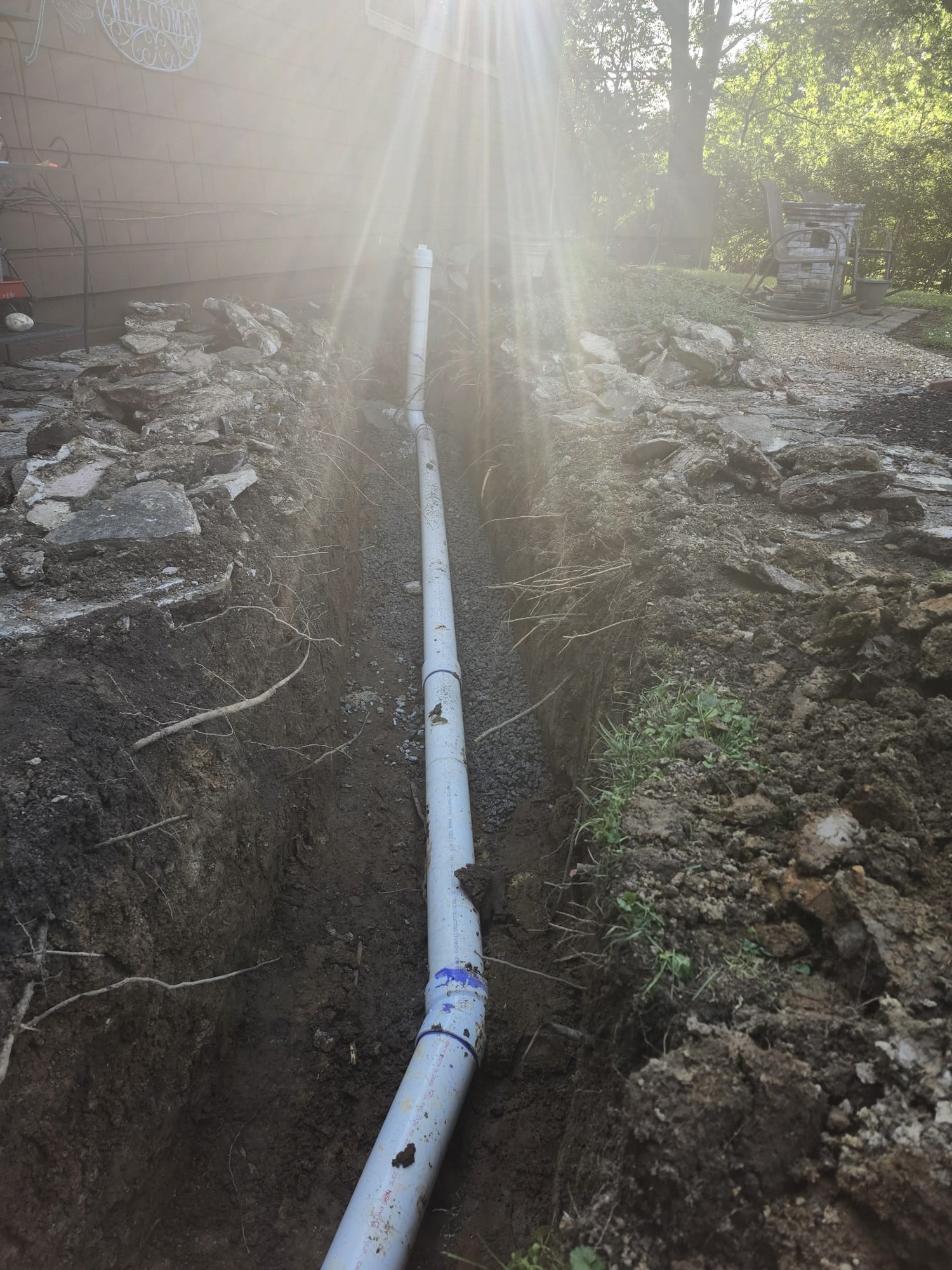
- About 66 feet of old pipe were replaced with durable PVC, avoiding the tree’s root zone.
- A new two-way cleanout was added near the rear flower bed, and the city’s access point was fitted with a fresh cap.
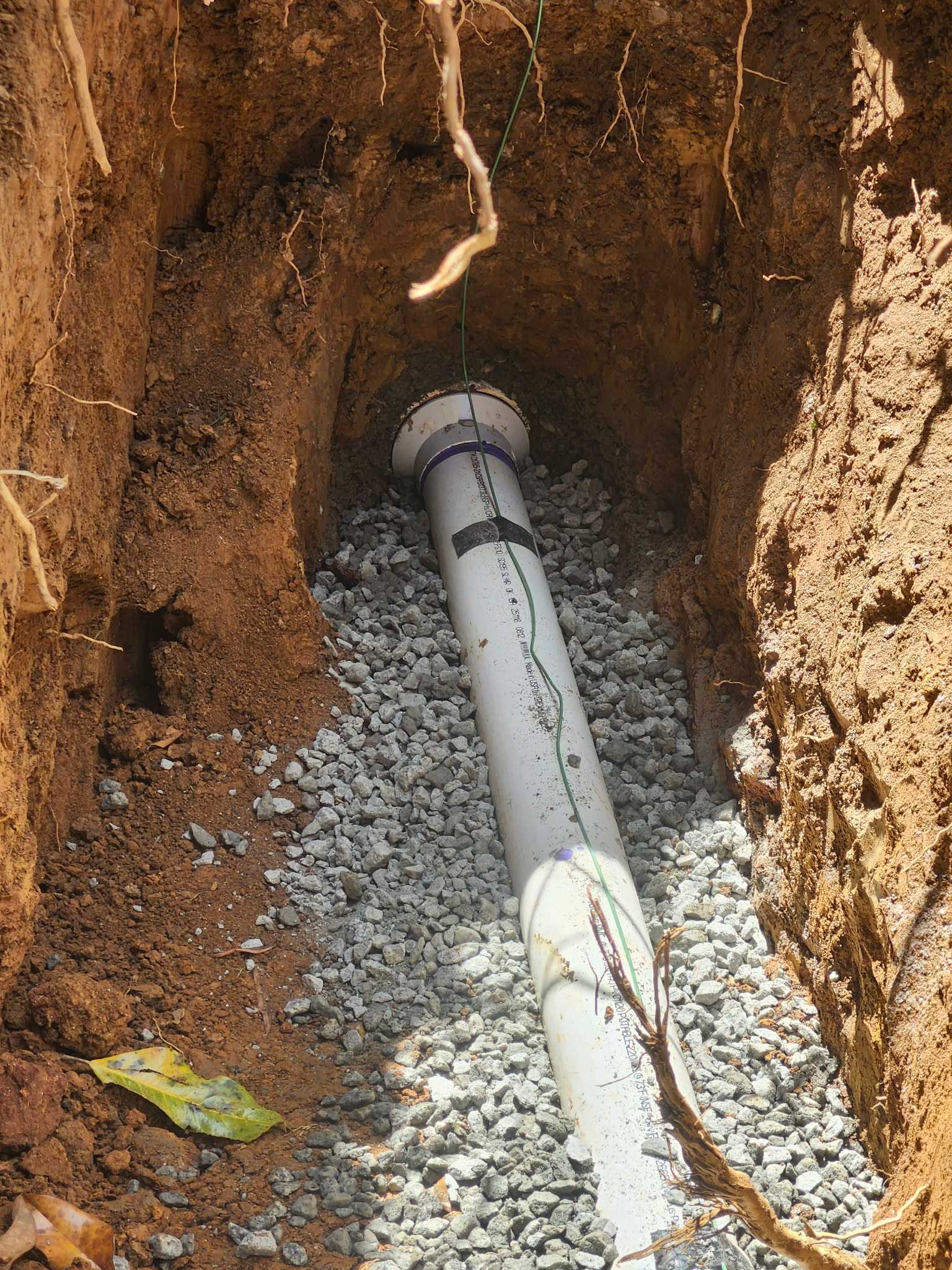
- Gravel bedding was placed under and around the new line for stability and proper flow.
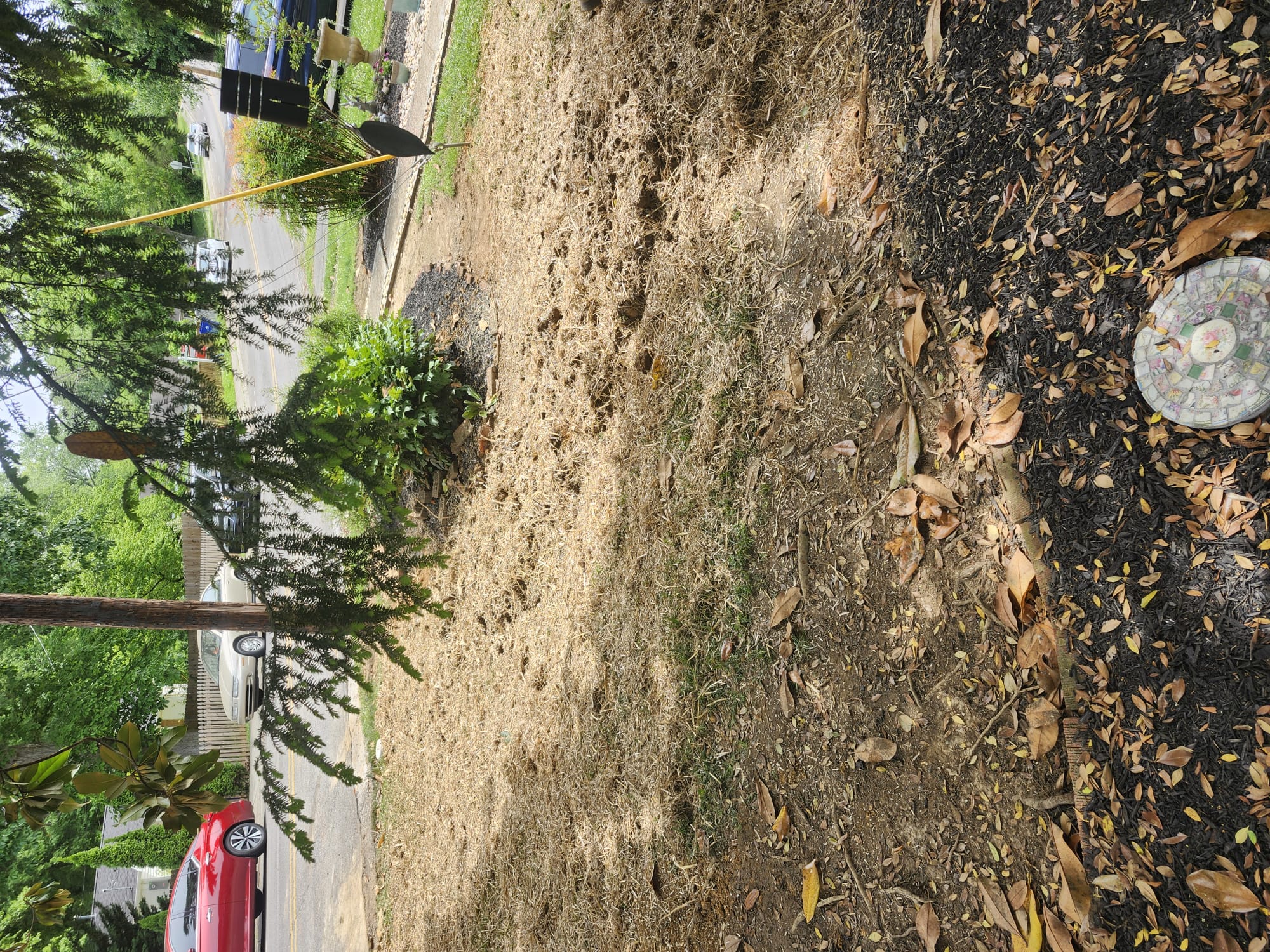
- The system was pressure-tested, inspected by the city, then backfilled. Seed and straw restored the lawn with minimal disruption.
Digging and Installing the New Line
Before any pipe goes in, careful planning is key. The HEP technician mapped a trench path that stayed clear of big roots, then carefully dug down until the connections at both ends were exposed. Modern PVC pipe bends easily to follow a gentle slope—essential for sewer flow—and won’t rust or corrode like older lines.
Tip: If tree roots are a concern, ask your plumber about routing a new line around the roots instead of cutting down your tree.
Adding and Upgrading Cleanouts
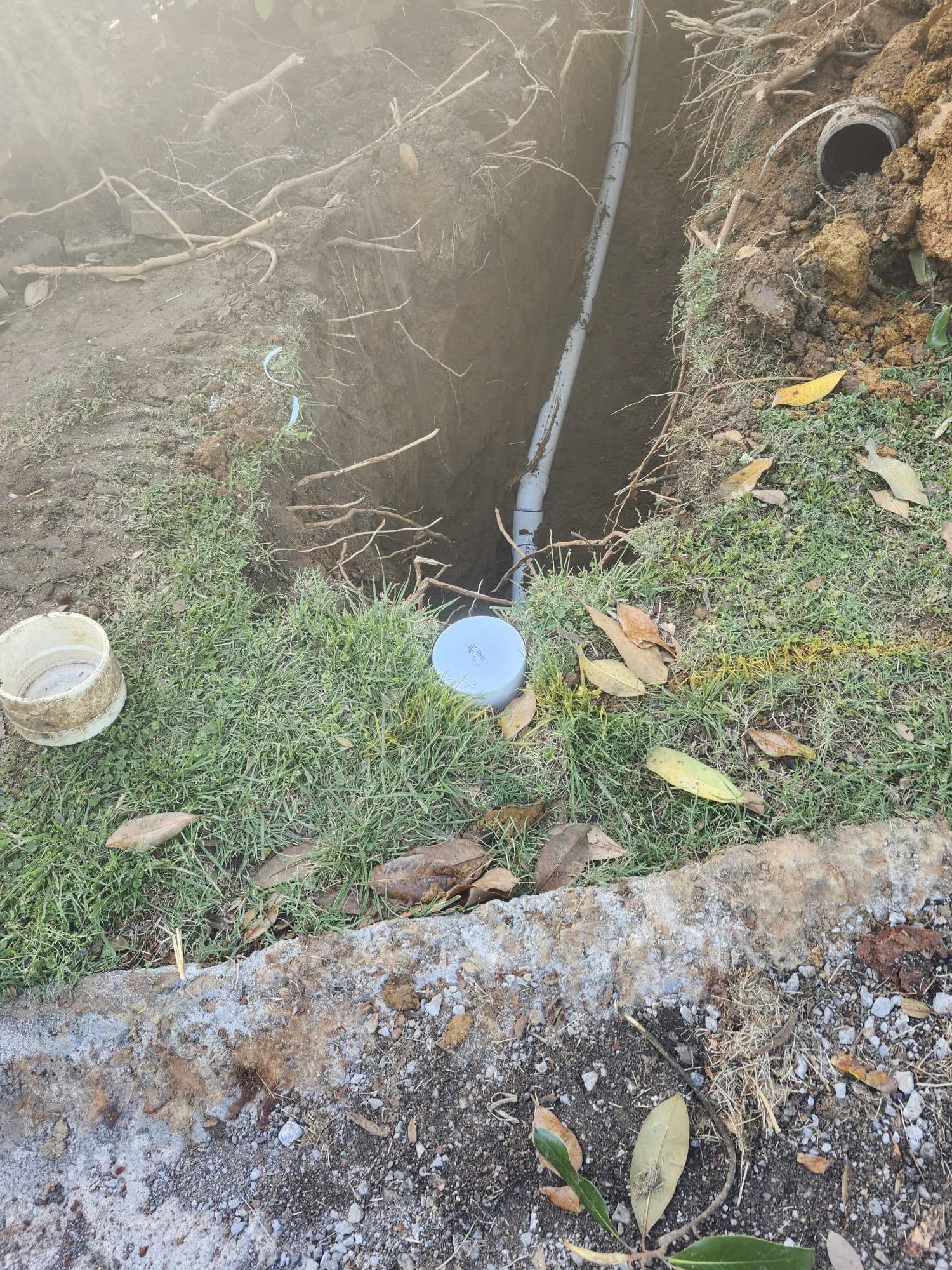
Cleanouts are access points that let a plumber clear blockages without digging up your yard again. In this case:
- A two-way cleanout was placed in a landscaped bed behind the house.
- The original city clean-out received a new cap for ease of future maintenance.
Tip: Make sure all cleanouts are visible and easy to reach—covering them with mulch or leaves can hide them when you need quick access.
Testing and Tracer Wire
Before sealing everything back up, the line needs to be leak-free and properly sloped. A simple water test confirms there are no leaks. Installing a tracer wire alongside the PVC means future technicians can find the pipe underground without digging random holes.
Tip: Ask about tracer wire so you can avoid guesswork (and extra digging) if you ever need repairs or inspections down the line.
Restoring Your Lawn
Once the new sewer line passes city inspection, it’s time to restore the yard. Backfill the trench, gently tamp the soil, then spread seed and straw to protect young grass seedlings.
Tip: After any underground plumbing work, leave the straw in place until grass is well-established to prevent erosion and keep the area tidy.
HEP’s Promise to Homeowners
A sewer repipe might sound daunting, but with the right planning and professional care, it can be quick and hassle-free. Here are a few final takeaways:
- Use a camera inspection to pinpoint hidden problems without guesswork.
- Plan your route to avoid mature landscaping and protect your trees.
- Install cleanouts for easy maintenance down the road.
- Restore the work area so your yard looks as good (or better) than before.
When a HEP technician shows up, you can trust they’ll handle everything—from root-filled cast iron to a smooth-running PVC system—so that you won’t have to worry about backups again.
Published on May 26, 2026