How a Hidden Roof Leak Into a Ceiling Light Was Solved in Dandridge
A homeowner in Dandridge noticed water dripping into a ceiling light, which often means the leak is starting somewhere above the room instead of right where the drip appears. For readers who want to learn more about Roofing, Dandridge, or Roofing in Dandridge, this HEP service visit is a good example of how a small roof opening can create a much bigger indoor problem. An HEP technician traced the moisture to a worn roof vent area and aging pipe seals, then replaced the damaged parts, reconnected the vent properly, and finished the area with matching shingles so the roof was sealed again.
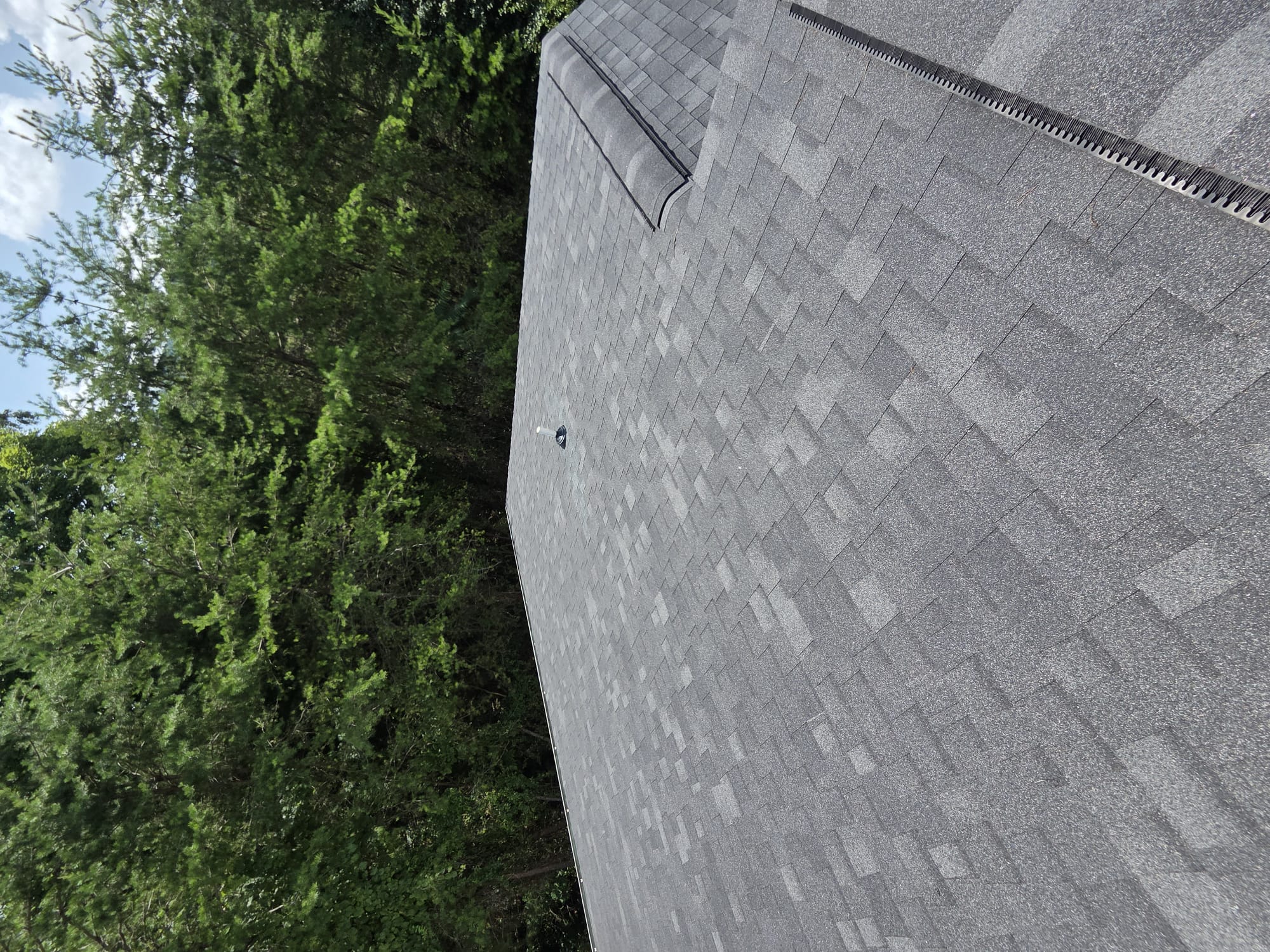
Why a leak can show up at a light fixture
When water gets into a roof, it does not always drip straight down. It can travel along wood framing, insulation, or other materials before finally showing up inside the home. That is why a stain or drip near a light fixture may actually be caused by:
- A worn seal around a pipe or vent
- A cracked roof opening cover
- Loose or aging shingles around a penetration
- Old patching material that no longer keeps water out
In this case, the roof itself did not need a full replacement. The issue was focused around one problem area and a couple of nearby roof seals, which made a targeted repair the right solution.
What the HEP technician looked for
The first step was to check both the attic and the roof surface. That matters because the inside view often reveals the real path of the leak.
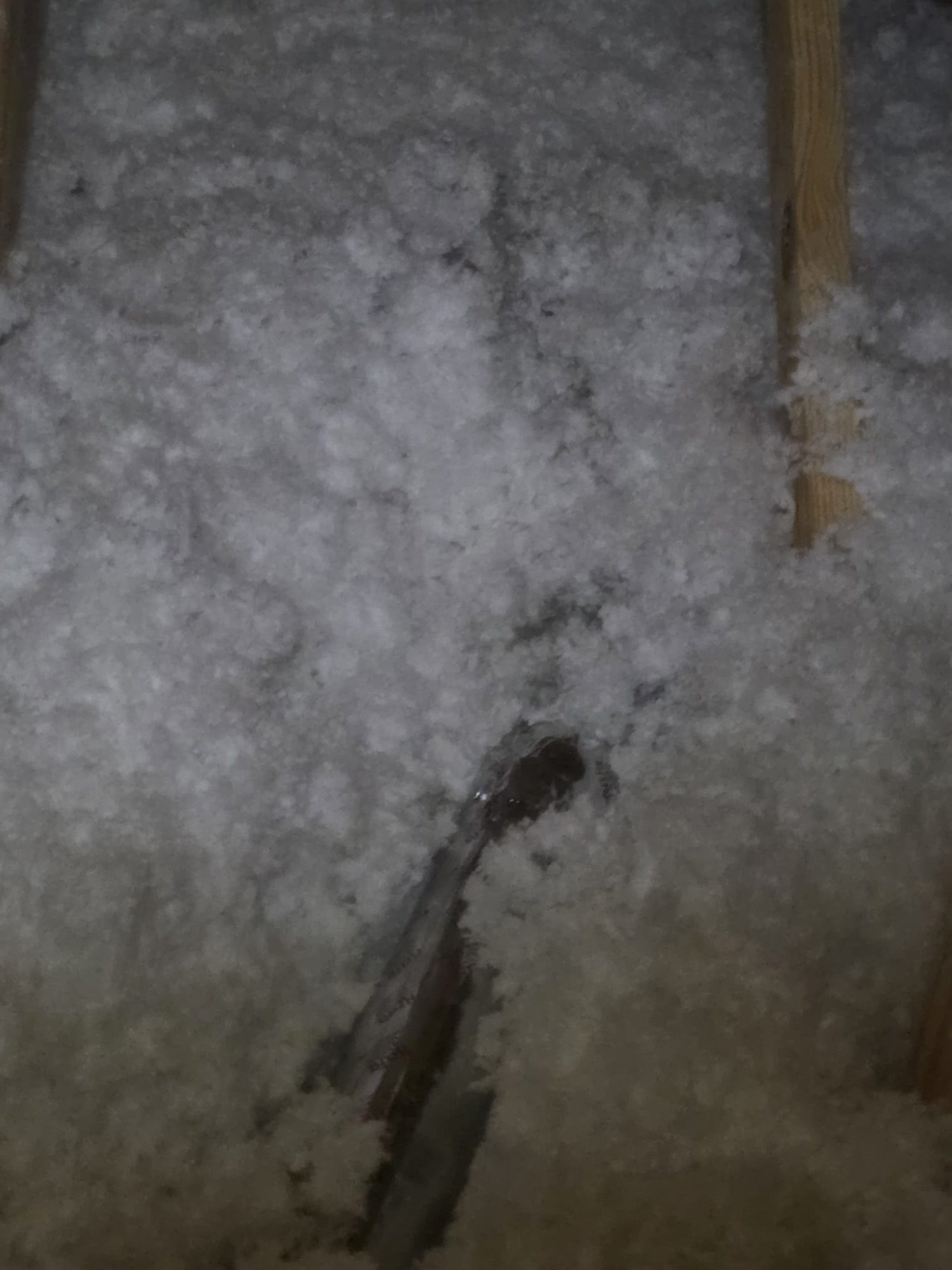
From the attic side, an HEP technician can often spot signs that are easy to miss from outside, such as:
- Dark staining on wood or insulation
- Damp spots near roof openings
- Gaps where daylight should not be visible
- Signs that a vent pipe is not seated correctly
A roof leak may seem small at first, but moisture left alone can lead to damaged insulation, stained ceilings, or even more serious interior repairs later.
How the repair was completed in Dandridge
Once the problem area was identified, the fix focused on restoring a tight seal around the roof opening and the nearby pipe penetrations. The damaged vent component was replaced, the vent pipe was properly reattached, and the surrounding roof details were refreshed so water would stay out.
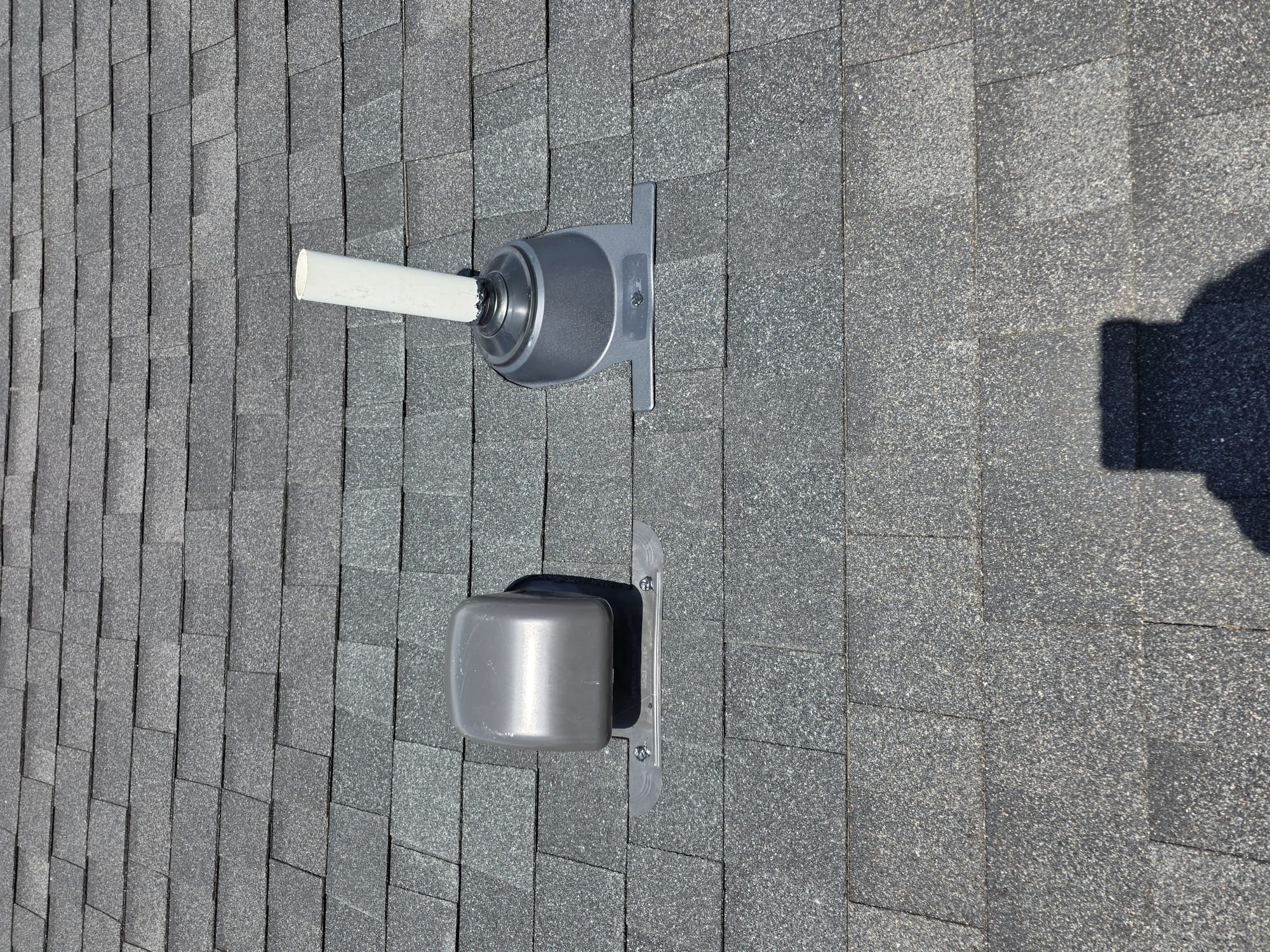
The repair also included replacing two nearby pipe seals because they were showing age and could have become future leak points. That kind of preventive work is helpful for homeowners, because it can stop one repair from turning into several later on.
In simple terms, the solution was:
- Replace the failing vent part
- Secure the vent pipe correctly again
- Refresh nearby pipe seals
- Cover the repaired section with matching shingles
- Confirm everything was sealed and ready for weather
Why small roof parts deserve attention
Many homeowners focus on shingles, but the small parts around the roof are often where leaks begin. Pipe seals, vents, and flashing pieces are the spots that work the hardest because they must keep water out while still allowing pipes and air systems to pass through the roof.
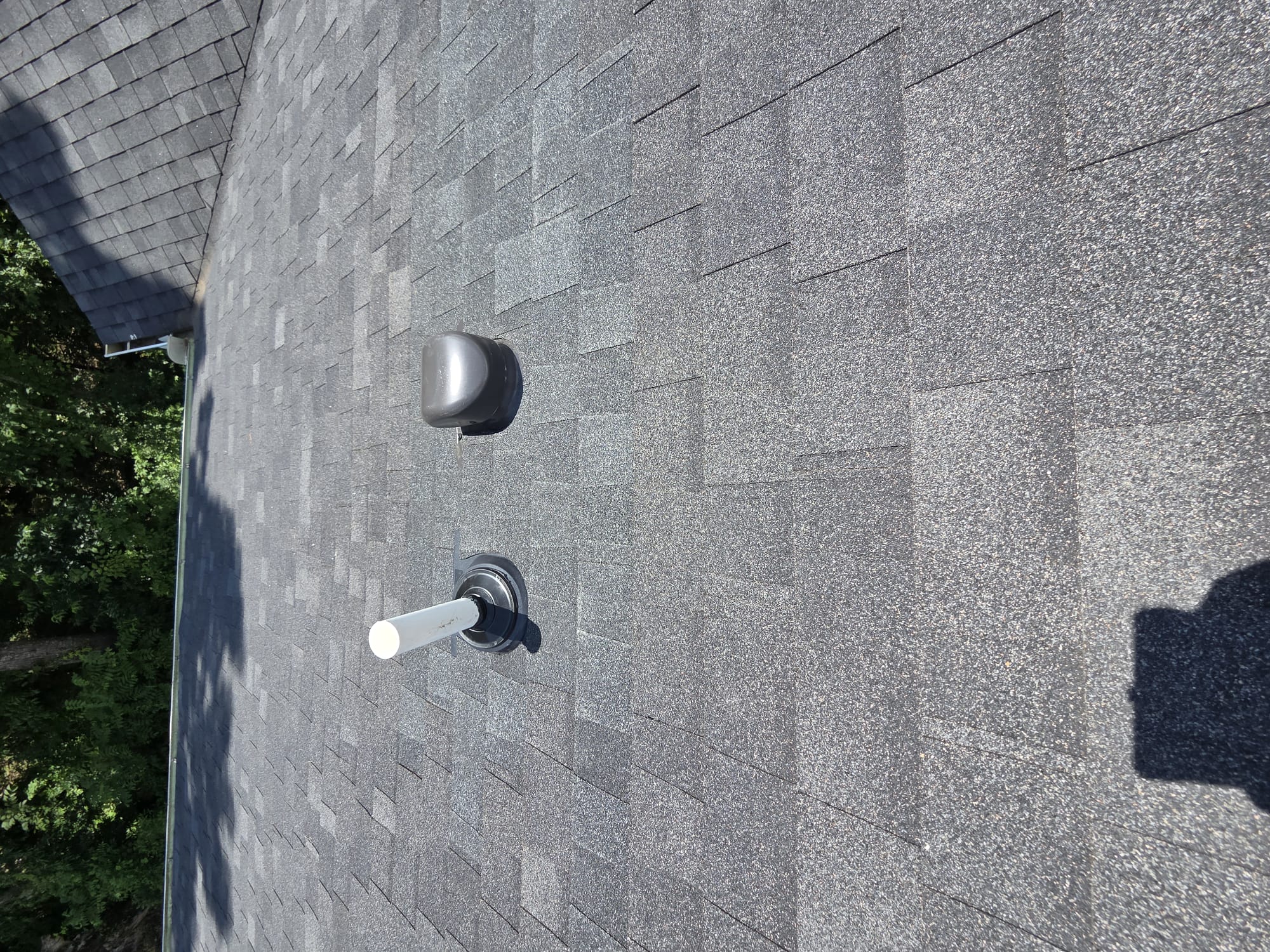
A few practical things to know:
- Old rubber collars can dry out and split over time.
- Heavy caulk is not always a long-term fix if the part underneath is failing.
- Debris can hold moisture against the roof and speed up wear.
- Nearby trees can shorten roof life by dropping branches and leaves onto the surface.
This is why roof maintenance is not just about shingles. It is also about keeping the smaller sealed openings in good shape.
A close-up example of a proper roof seal
A well-fitted roof seal around a pipe should look neat, stay snug, and direct water away from the opening. When the seal is installed correctly, it helps protect the home from hidden leaks.
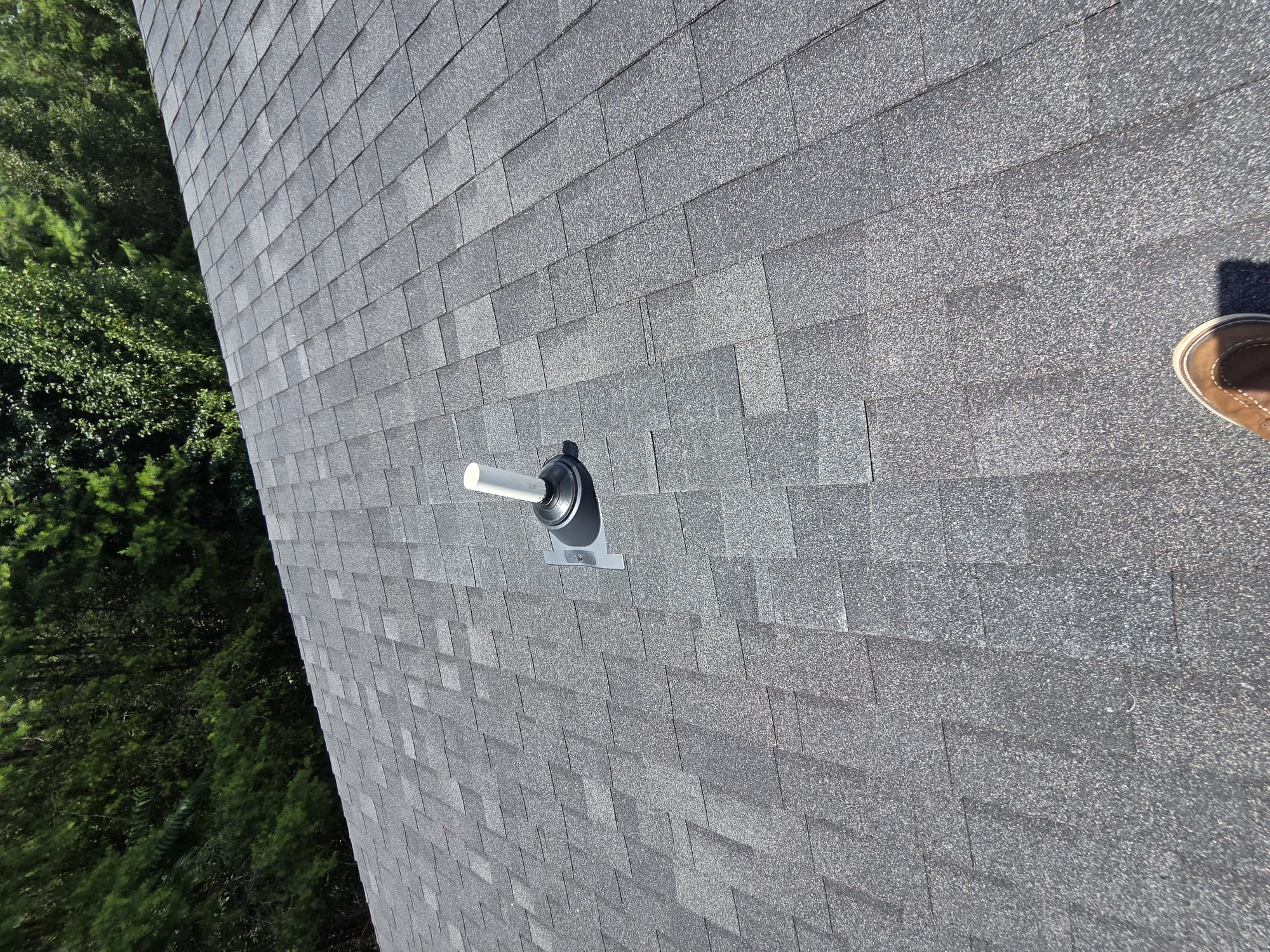
For homeowners, the biggest takeaway is that a roof penetration should never be ignored. Even a small gap can allow water into the attic, and once moisture gets in, the damage may show up far from the actual leak.
Helpful tips for homeowners
If you want to reduce the chance of a surprise leak, keep these simple habits in mind:
- Look for ceiling stains early. Water marks near lights or vents should be checked quickly.
- Check the attic after heavy rain. A musty smell or dark spotting can be an early clue.
- Keep the roof clear of branches and leaves. Debris can trap moisture and hide damage.
- Watch the areas around pipes and vents. These are common leak points on many roofs.
- Schedule an inspection if the roof is aging. Small issues are easier to fix before they spread.
Final takeaway
This Dandridge repair is a good reminder that roof leaks are not always obvious from the outside. In this case, an HEP technician found the hidden source, repaired the failing roof vent area, refreshed nearby pipe seals, and finished the roof so the homeowner could move forward with confidence.
If you notice water near a ceiling fixture, do not wait for the stain to grow. A prompt roof inspection can help protect the attic, the ceiling, and the rest of the home.
Published on July 27, 2026