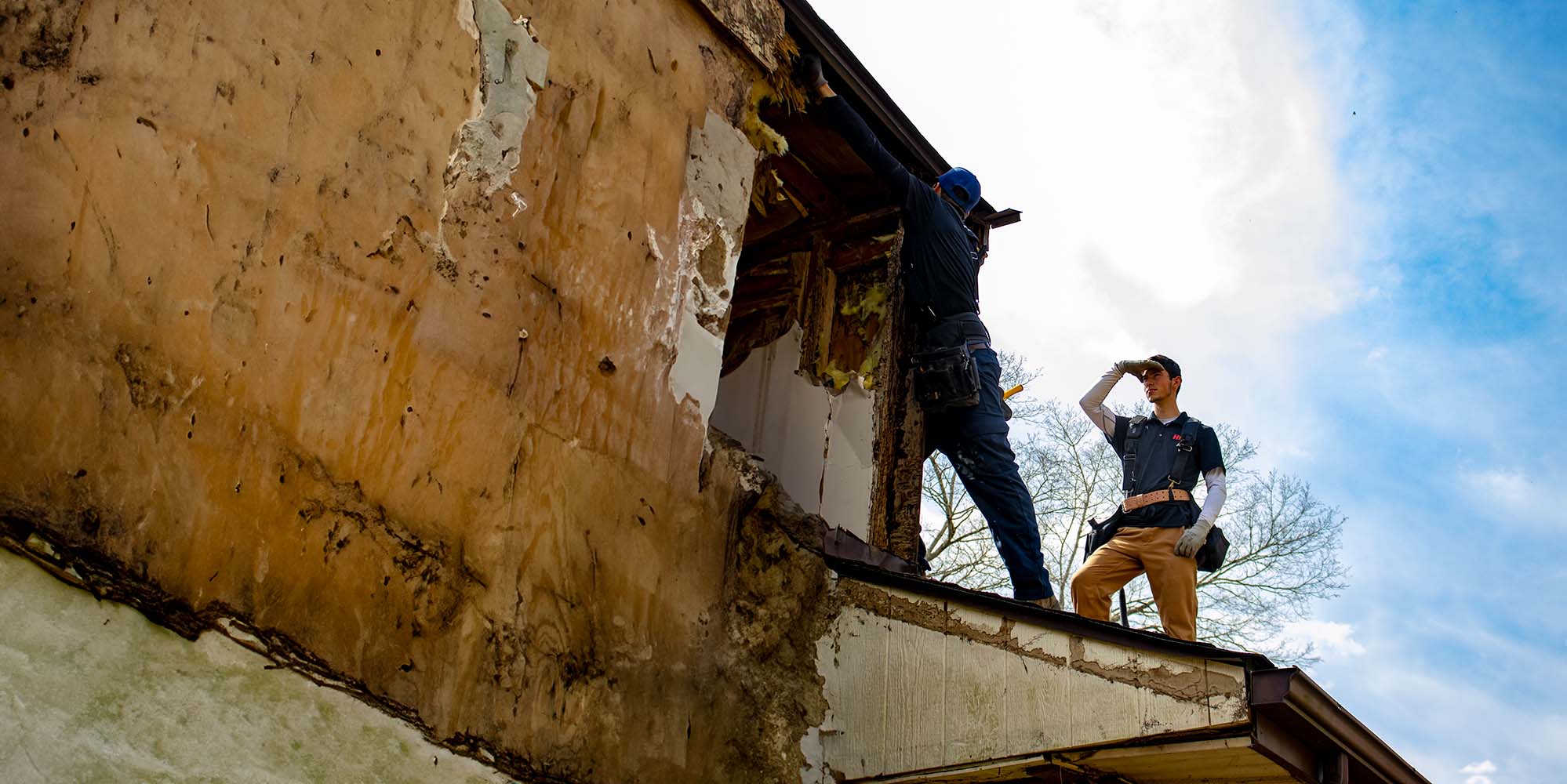

Emergency Roof Tarping
Your trusted partner for professional home services. Quality workmanship, guaranteed satisfaction.

Emergency Roof Tarping | Storm Damage Restoration | Roofing | Bluff City
When violent weather strikes Bluff City, minutes matter. HEP’s Emergency Roof Tarping crew arrives fast, sealing exposed decking with industrial-grade tarps that stop water intrusion in its tracks. Our licensed professionals document every shingle, flashing, and fascia issue for your insurance claim, giving you peace of mind while the storm clouds still linger overhead.
Next, we transition from quick protection to full storm damage restoration, repairing or replacing roofing components with materials that stand up to Tennessee’s toughest winds. Whether you’re dealing with punctures from flying debris or widespread shingle loss, we handle permits, meet code, and keep you informed at every step.
A live dispatcher answers 24/7, so you can call anytime a tree limb crashes down or hail starts to melt inside your attic. Trust HEP to safeguard your home today and rebuild it stronger for tomorrow—because in Bluff City, we’re neighbors first and roofers second.
FAQs
What is emergency roof tarping and why is it important after a storm in Bluff City?
Emergency roof tarping is the rapid installation of heavy-duty, waterproof tarps over damaged sections of your roof to stop active leaks, protect the interior of your home, and prevent further structural decline. Bluff City is prone to sudden wind, hail, and thunderstorm activity that can tear off shingles or puncture decking. A professionally secured tarp creates an immediate weather-tight barrier until permanent repairs can be scheduled, helping you avoid secondary water damage, mold growth, and higher restoration costs.
How quickly can your team respond to a storm-damage call in Bluff City?
We maintain 24/7 on-call crews stationed in and around Bluff City. In most cases we can arrive within 1–3 hours of your call, even during widespread storm events. Our trucks are stocked with tarps, battens, anchors, and safety gear so work can begin as soon as we reach your property. If access roads are blocked, we’ll keep you updated on revised ETAs and advise you on interim damage-control steps.
What does your emergency roof tarping service include?
Our service is turnkey: • On-site inspection to map all impacted roof areas and identify safety hazards. • Removal of loose debris, branches, and damaged shingles that could pierce the tarp. • Installation of industrial-grade 8-mil (or thicker) polyethylene tarps, secured with wooden battens, cap nails, and/or sandbags depending on roof type. • Temporary sealing of protrusions (chimneys, vents, skylights) with tape or flashing to maintain watertight integrity. • Photo documentation for your insurance claim and a written assessment outlining recommended permanent repairs. • Optional moisture mitigation inside the attic if active leaks have saturated insulation or ceilings.
Will tarping my roof be covered by homeowners insurance?
Most standard homeowners policies written for Tennessee treat emergency tarp installation as part of the reasonable and necessary steps a policyholder must take to mitigate further damage after a covered peril—such as wind or hail. In many cases the expense is reimbursable under the dwelling coverage portion of your policy and does not count against your deductible separately from the overall roof repair. We supply itemized invoices and photo evidence to support your claim and can communicate directly with your adjuster to streamline the process.
How long can a temporary tarp stay on my roof before permanent repairs are made?
A properly installed tarp can safeguard your roof for 60–90 days, sometimes longer, but it is best viewed as a short-term solution. Ultraviolet exposure, wind uplift, and temperature swings eventually weaken the material and anchoring points. We recommend scheduling full repairs or roof replacement as soon as your insurance claim is approved and weather conditions allow. We offer free repair estimates and can transition seamlessly from tarping to restoration to minimize downtime.
What should I do while waiting for the tarping crew to arrive?
1. If safe, place buckets or plastic sheeting under interior leaks to catch water. 2. Shut off electricity to rooms where water is pouring through fixtures or ceiling fans. 3. Photograph visible roof damage and interior water stains for insurance documentation. 4. Move valuables, electronics, and furniture away from leak zones to prevent additional loss. 5. Avoid climbing on the roof yourself—wet shingles and loose debris make conditions hazardous. 6. Keep your phone nearby in case our dispatch needs directions or status updates.