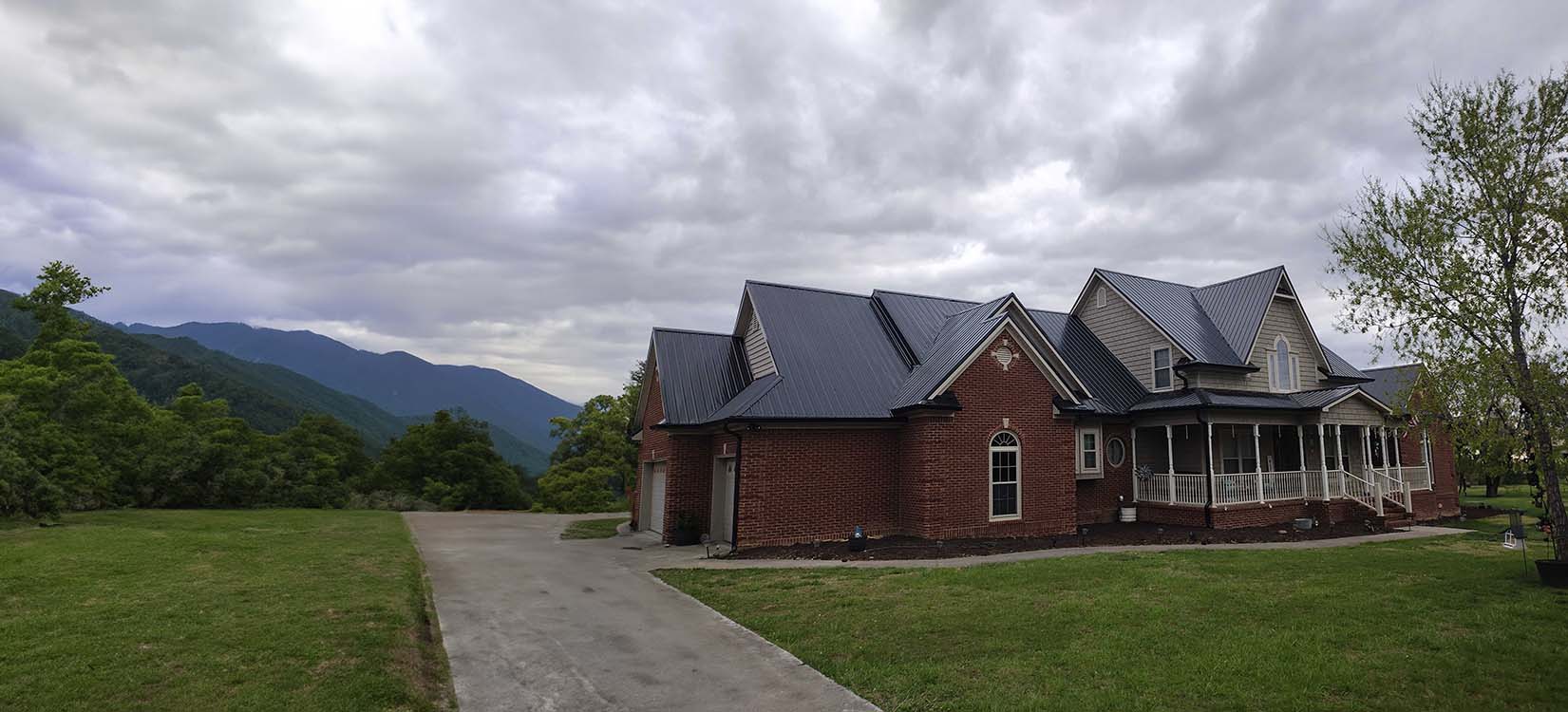

Fade-resistant Colors
Your trusted partner for professional home services. Quality workmanship, guaranteed satisfaction.

Fade-resistant Colors | Metal Roofing | Roofing | Bluff City
Bluff City’s unpredictable sun, rain, and temperature swings don’t stand a chance against HEP’s fade-resistant colors. Our precision-coated panels lock in vibrant hues that look freshly installed year after year, turning every home or business into a standout without the worry of peeling paint or dull, chalky streaks. Residents love the instant curb-appeal boost, and contractors appreciate how lightweight strength simplifies installation while slashing maintenance demands.
When you choose HEP’s metal roofing, you’re investing in energy-efficient reflectivity, Class 4 impact resistance, and a warranty that protects both color and performance. From rustic barn reds to modern charcoal grays, each shade is engineered for East Tennessee’s climate and backed by a team that’s been serving the Tri-Cities for decades. Ready to give Bluff City a roof that refuses to fade? Talk with HEP today and watch your property shine for decades to come.
FAQs
What makes your metal roofing colors fade-resistant?
We use high-performance SMP and Kynar® 500/Hylar® 5000 PVDF paint systems that are engineered to block ultraviolet (UV) rays, moisture, and airborne pollutants—the three main causes of color loss. The pigments are ceramic-based, so they resist chalking and maintain their vibrancy even under Bluff City’s strong summer sun and occasional hail or ice. Every panel is oven-cured to bond the coating to the steel, creating a finish that is far more color-stable than the field-applied paints used on many other products.
How long can I expect the finish to last in Bluff City’s climate?
Our fade-resistant colors carry a 40-year written paint warranty, with many shades performing well beyond 50 years. In Bluff City, where summers are hot and humid and winters can dip below freezing, the coating system is tested to withstand more than 10,000 hours of accelerated UV exposure, 1,000 hours of salt-spray, and repeated thermal cycling. Most homeowners see less than a 5ΔE color change—barely perceptible to the naked eye—for decades.
Will a fade-resistant metal roof save me money over time?
Yes. Although the initial investment is higher than standard asphalt shingles, the reflective pigments in our light and medium colors can cut summer cooling costs by up to 25 %. The long service life means you avoid 2–3 full tear-offs and re-roofing cycles, saving thousands in labor and landfill fees. A vibrant, like-new appearance also boosts curb appeal and resale value—important in Bluff City’s competitive housing market.
Are there HOA or building code considerations for colored metal roofs in Bluff City?
Washington County and Bluff City have no code restrictions on metal roof colors, but some subdivisions and lake communities do have HOA guidelines. We provide color samples and reflectivity data to help you secure approval. All of our panels meet International Building Code (IBC) and International Residential Code (IRC) standards, and our cool-roof colors are Energy Star® compliant, qualifying for certain local utility rebates.
How does installation of colored metal roofing differ from traditional shingle roofs?
Our standing-seam and exposed-fastener panels are pre-finished at the factory, so no painting is done on-site. We use color-matched stainless or coated steel fasteners and concealed clips to prevent galvanic reaction and rust rings that can cause color streaks. Because metal panels are lighter than shingles (about 1.5 lb/ft²), they often can be installed over a single existing layer, reducing disposal costs and project time.
What maintenance is required to keep the color vibrant?
Very little. An annual low-pressure rinse with a garden hose removes airborne dirt and pollen that can dull the surface. For tree sap or industrial residue, a gentle soap solution (pH 6–8) and soft brush are sufficient—no harsh abrasives or pressure washers needed. Avoid chlorine bleach and ammonia cleaners, which can break down the finish. Inspect caulked joints and fasteners each spring; replacing any degraded sealant prevents water intrusion that could lead to under-panel corrosion.