Restoring Hot Water Service: Tips from Clinton’s Plumbing Pros
Plumbing
Clinton
Plumbing in Clinton
The Unexpected Basement Leak
One afternoon, a homeowner in Clinton noticed water seeping from the connections atop their 15-year-old electric water heater in the basement. A small puddle had formed beneath the tank, and the flexible hot-water line showed signs of corrosion. Concerned about both water damage and a sudden loss of hot water, the homeowner reached out to HEP for [Plumbing] assistance.
HEP technician arrived promptly, inspected the aged unit and its fittings, and explained that while a quick patch might stop the drip temporarily, the heater’s age and outdated components made a full replacement the safer, longer-term solution. The homeowner agreed to provide a new electric tank and schedule an afternoon installation.
How the Issue Was Resolved
- Removal of the old water heater and its worn connections.
- Installation of a customer-supplied 40-gallon electric water heater.
- Replacement of incoming and outgoing lines with code-compliant copper piping and a new shutoff valve.
- Addition of a modern expansion tank above the unit to meet current safety requirements.
- Thorough leak testing and system flush to ensure reliable performance.
Within hours, the basement was dry and the homeowner had a dependable source of hot water once more—all thanks to the skill and efficiency of a HEP technician.
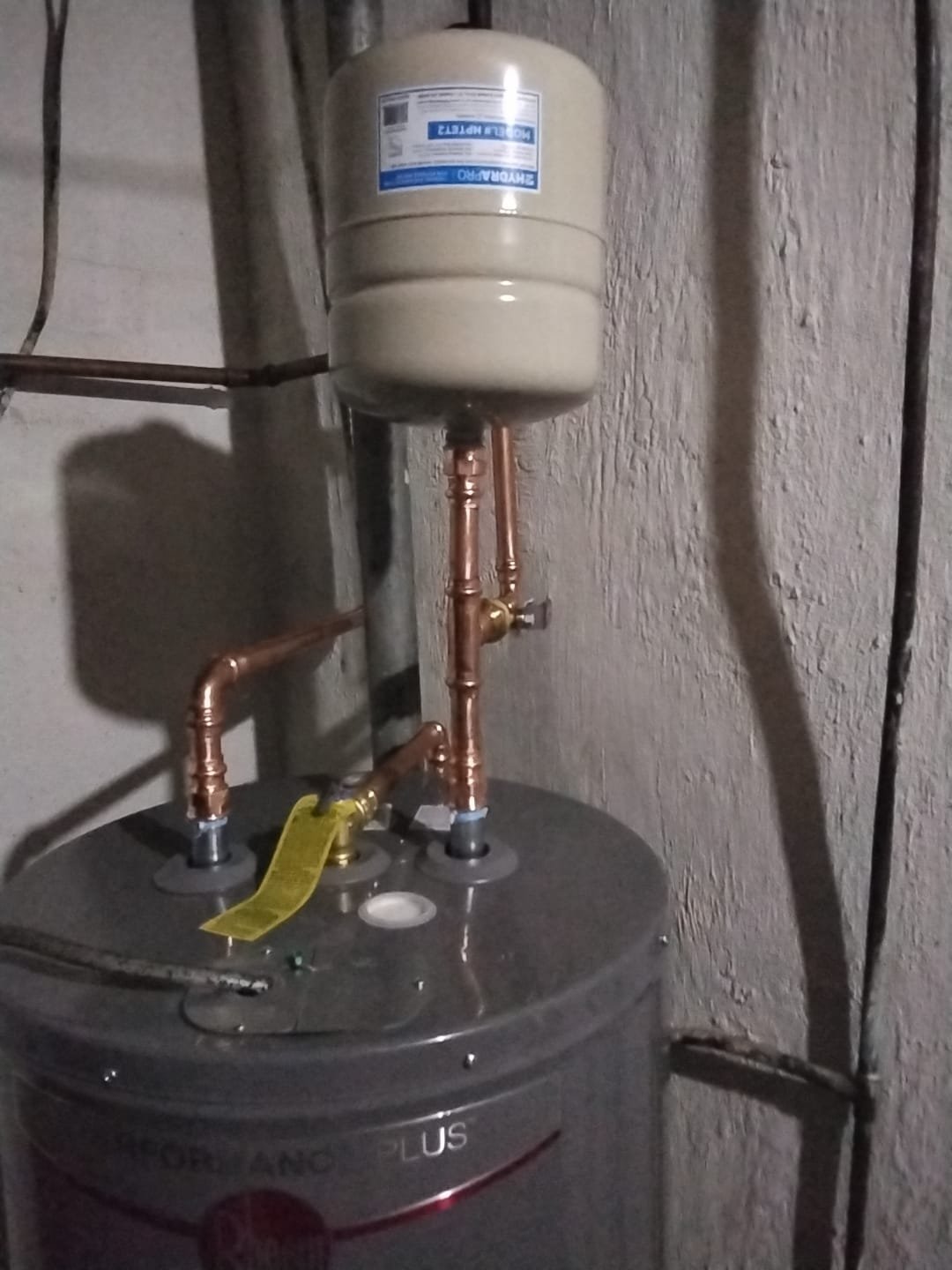
A clean, professional setup shows the new water heater with expansion tank and freshly soldered copper lines.
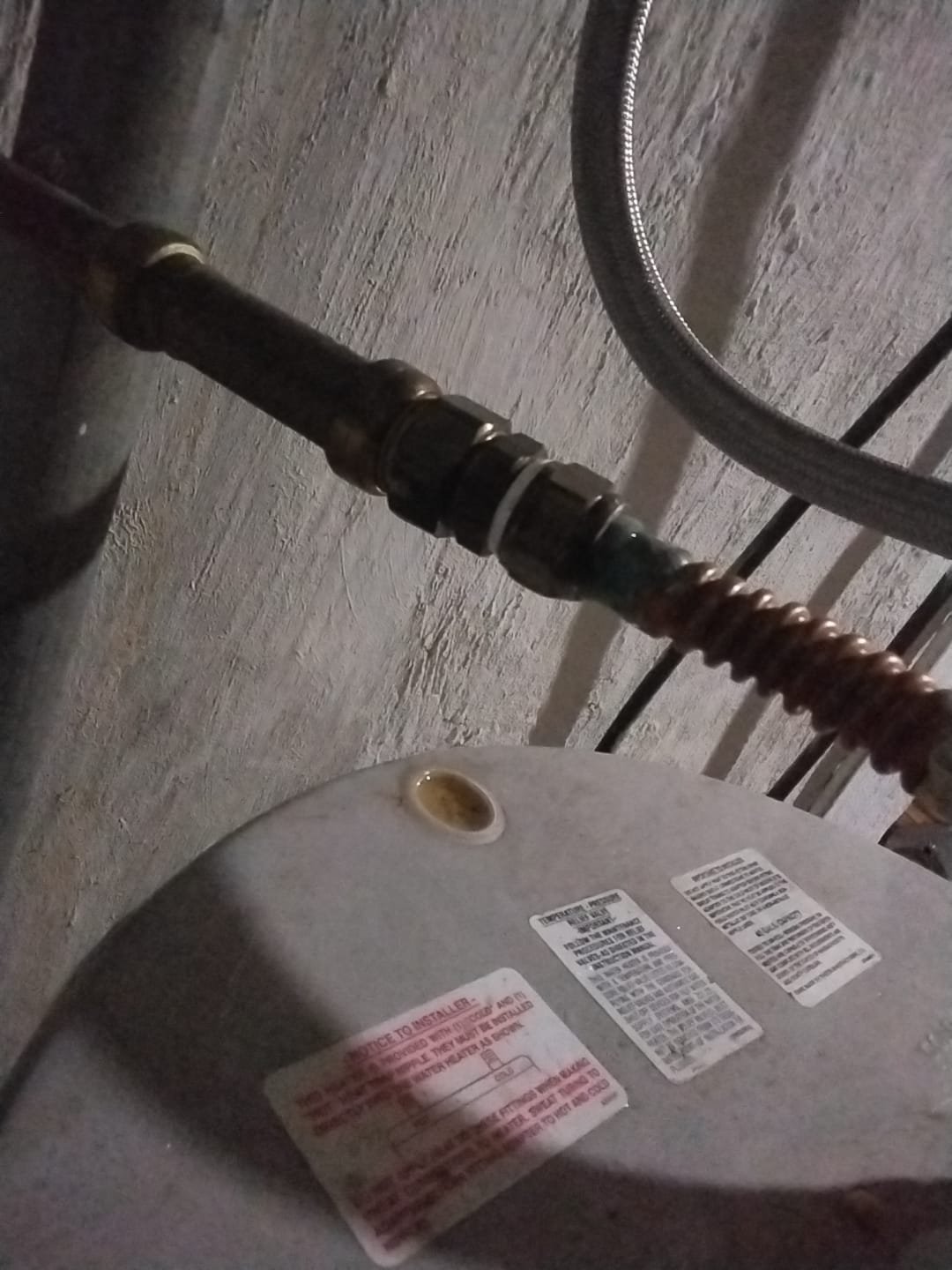
Close-up of the sealed connections, free of corrosion or leaks after the install.
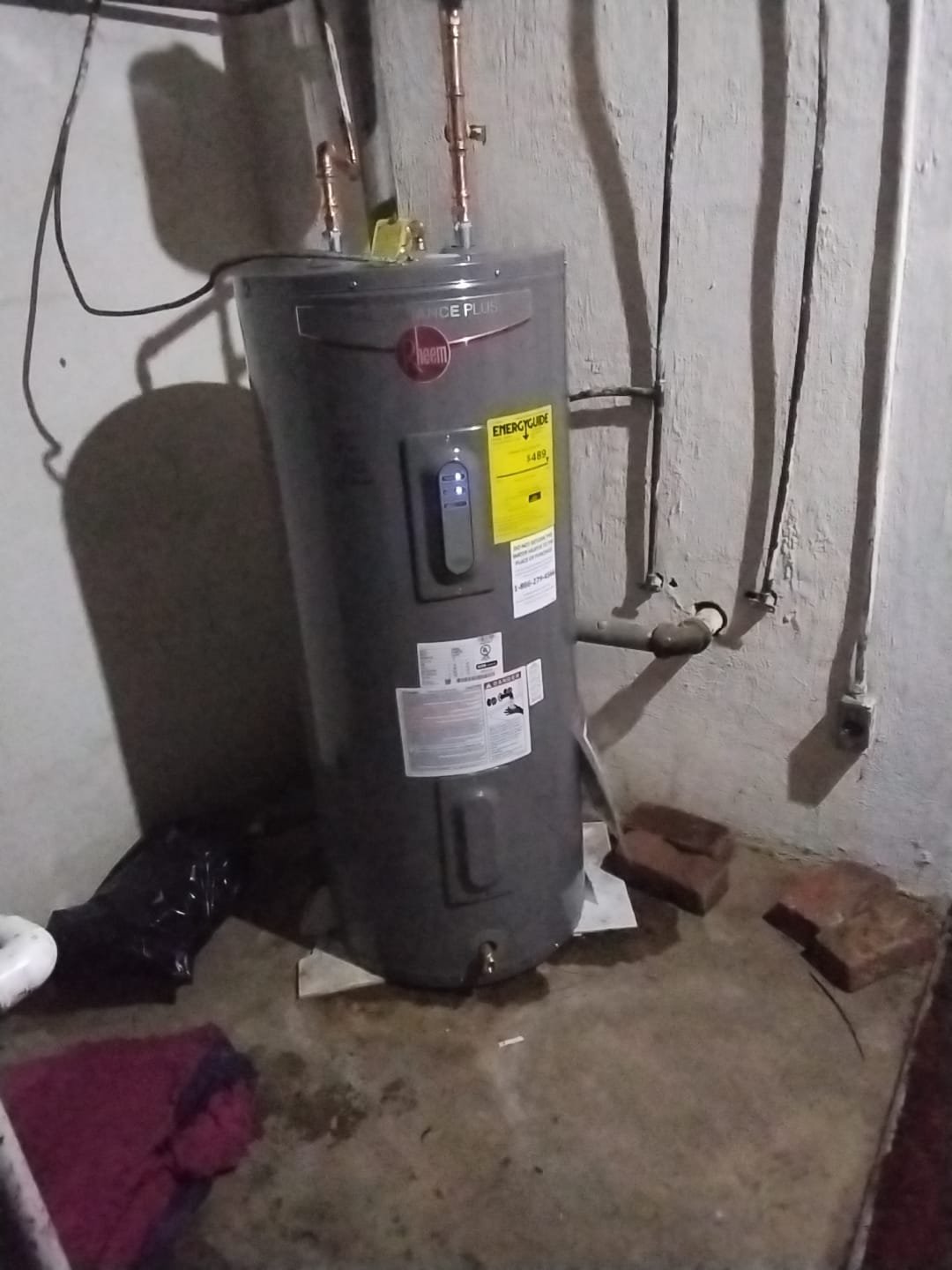
A modern unit ready to deliver hot water reliably for years to come.
Essential Tips for Homeowners
-
Inspect Flexible Lines Regularly
Check the hot-water supply hoses and flex connections for signs of rust, cracking, or bulging. Early detection can prevent water damage. -
Know When to Replace vs. Repair
A minor leak might seem easy to fix, but if the heater is over a decade old, replacement often saves time, stress, and money in the long run. -
Ensure Code-Compliant Upgrades
New installations should include a shutoff valve, proper piping, and an expansion tank. These elements protect your home and meet safety standards. -
Keep Surroundings Clear
A tidy area around the heater makes future servicing easier and reduces fire or flood risks. -
Consider Insulation for Exposed Lines
Outdoor or unheated spaces benefit from properly wrapped pipes to prevent freezing and heat loss.
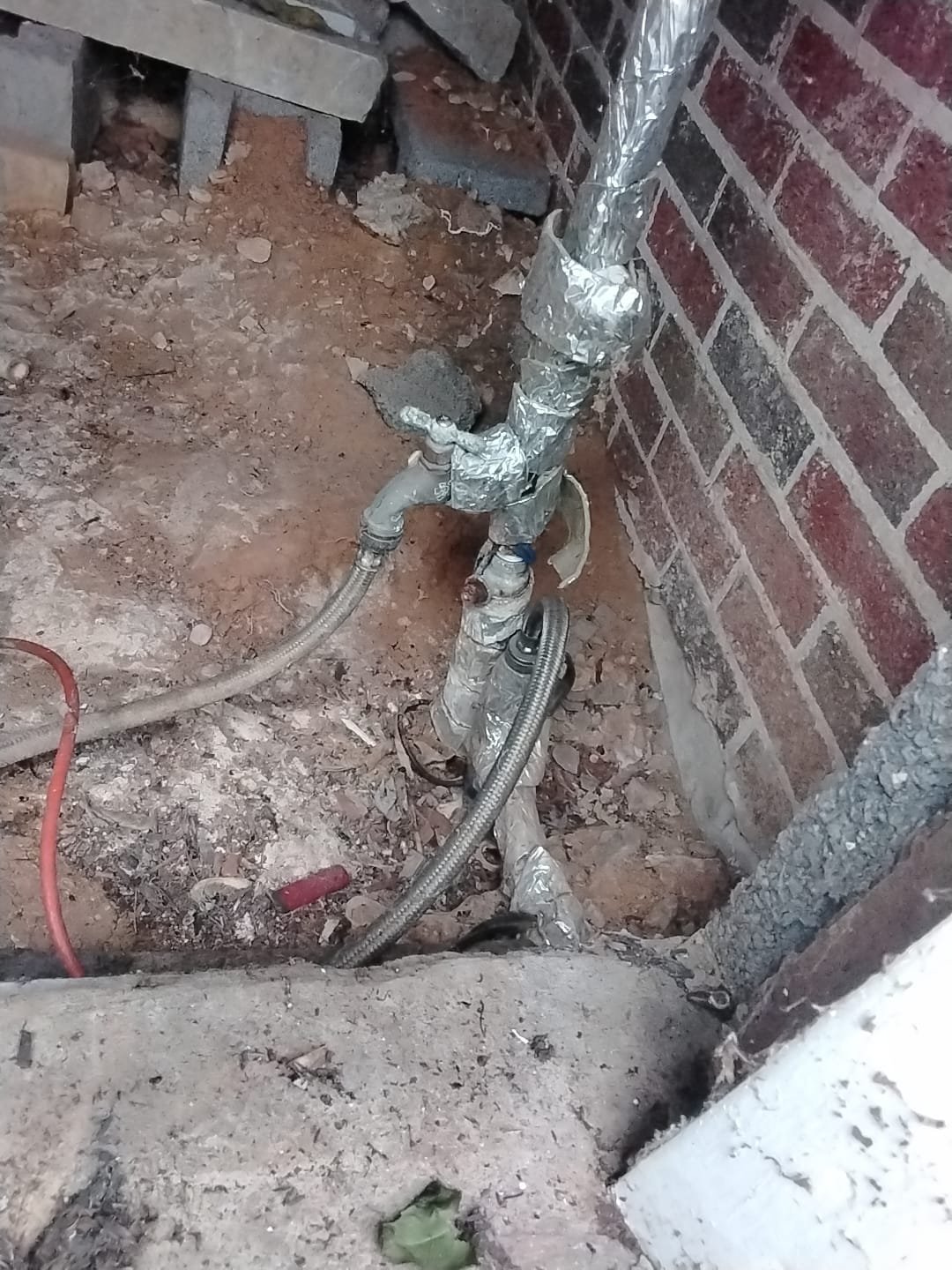
A reminder that insulation jobs should be neat and complete—ask a HEP technician for an upgrade if yours looks worn or improvised.
Whether you’re tackling a small drip or planning a full equipment swap, a qualified HEP technician can guide you through every step of [Plumbing in Clinton] and HVAC service needs. Regular check-ups and professional care will keep your home comfortable and safe year-round.
Published on March 6, 2026